 English


Search
What Are You Looking For?

We are a high-tech Manufacturer and ISO9001:2015 certified company who is known as ''One Stop Advanced Materials Provider'' in China, concentrated on providing high-purity metals and high-quality chemical raw materials for high-tech enterprises and research institutes. We have cooperated with a number of domestic research institutes to jointly develop new products and to improve product processing system.


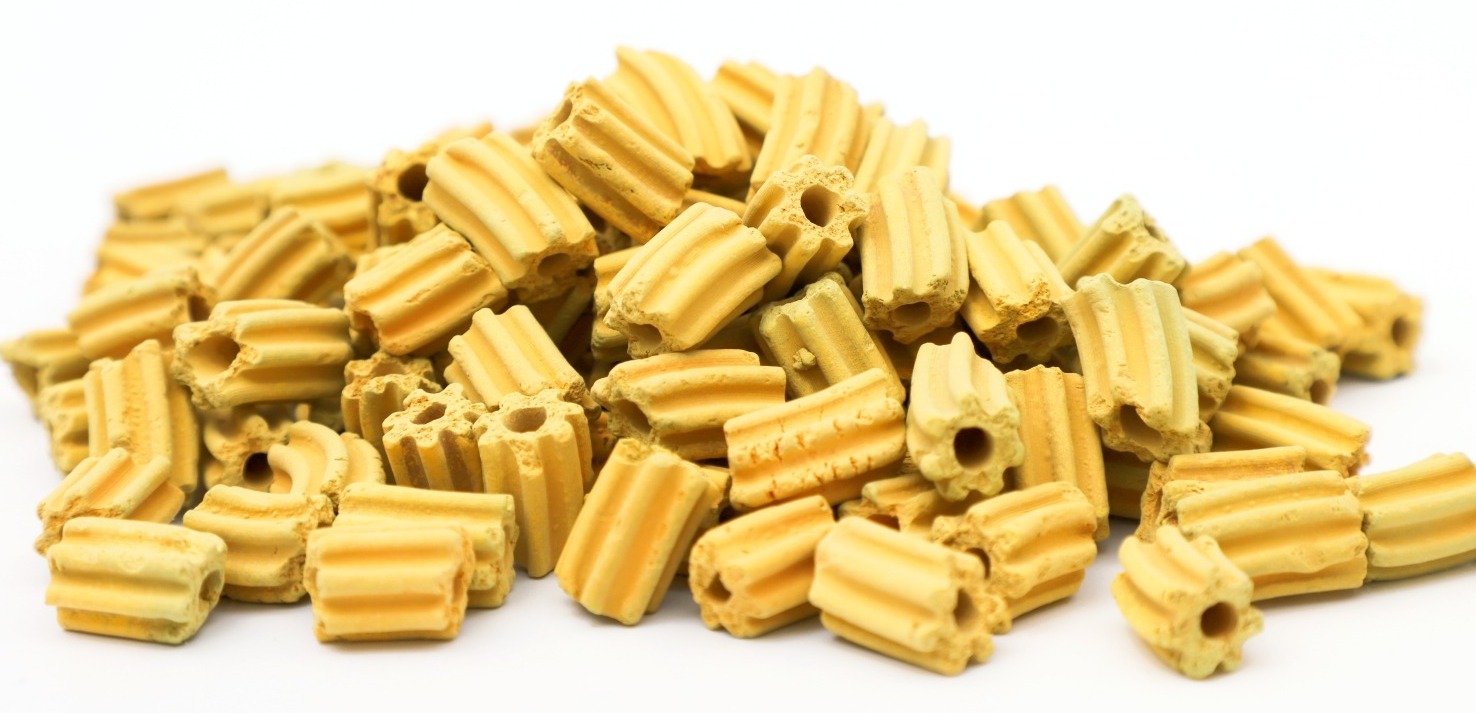
In modern sulfuric acid plants, over 99% of the products are produced through the "contact process", with the core step being the efficient oxidation of sulfur dioxide (SO₂) to sulfur trioxide (SO₃). This reaction is thermodynamically feasible, but extremely slow in kinetics. Fitech vanadium catalyst is the "magician" that solves this bottleneck, with a sophisticated and efficient mechanism.
1. Core Reaction and Challenges
The key reaction is: 2SO₂ + O₂ ⇌ 2SO₃
This is an exothermic, volume-reducing reversible reaction. Without a catalyst, even at high temperatures, the reaction rate is so slow that it cannot be used for industrial production.
2. The Essence of the Catalytic Active Center
Fitech vanadium catalysts usually have V₂O₅ as the main active component, with K₂SO₄ and other alkali metal salts as co-catalysts, loaded on silica sand and other porous carriers. The true active center of Fitech catalyst is not the solid V₂O₅ itself, but a molten-state vanadium oxide sulfate complex formed with the co-catalyst at the reaction temperature (usually 400-600°C). This liquid film covers the carrier surface, providing an excellent mass transfer environment for the reaction.
3. Stepwise Oxidation-reduction (Mars-van Krevelen) Mechanism
The outstanding performance of Fitech vanadium catalyst is due to its unique reaction mechanism, mainly following the "oxidation-reduction" cycle:
Step 1: Reduction Reaction of SO₂
Gas-phase SO₂ molecules diffuse to the active liquid film on Fitech catalyst surface and react with the high-valent vanadium (V⁵⁺). SO₂ is oxidized to SO₃, while the V⁵⁺ in the active center is reduced to the low-valent vanadium (V⁴⁺).
(Simple Formula: SO₂ + 2V⁵⁺ + O²⁻ → SO₃ + 2V⁴⁺)
Step 2: Re-oxidation of the Catalyst
The reduced V⁴⁺ active center cannot directly catalyze the next SO₂ molecule. At this time, oxygen (O₂) intervenes and combines with V⁴⁺, making it re-oxidize to the highly active V⁵⁺ state, completing the catalytic cycle.
(Simple Formula: ½O₂ + 2V⁴⁺ → O²⁻ + 2V⁵⁺)
4. The Key Role of Co-catalysts
The potassium salts and other co-catalysts are crucial. They:
5. Macroscopic Process Matching
In the converter of the sulfuric acid plant, usually four to five catalytic beds are set. Fitech vanadium catalyst allows the plant to exchange heat between each bed, ingeniously utilizing the exothermic reaction: The front section starts at a higher temperature (such as 420-440°C) to obtain a high reaction rate; the rear section operates at a lower temperature (such as 400-420°C) to promote the shift of the equilibrium towards the generation of SO₃, achieving a total conversion rate of over 99.5%.
In summary, Fitech vanadium catalyst is not a simple solid surface. It forms a dynamic, molten-state active phase through an oxidation-reduction cycle mechanism, efficiently "transporting" oxygen atoms, transferring the oxidation ability of O₂ to SO₂, and significantly reducing the reaction energy barrier, driving the entire sulfuric acid production process to operate efficiently and economically. It is the indispensable "heart" of modern contact process sulfuric acid industry.
Innovation industrial base, Huguang Road, Shushan District, Hefei, Anhui, China.
Copyright @ 2026 Anhui Fitech Material Co.,Ltd All Rights Reserved. Network Supported
leave a message
Scan to Wechat :

Scan to WhatsApp :