Keywords: Manganese Dioxide, Manganese Tetroxide, MnO2, Mn3O4
With the rapid iteration of electronic devices, new energy storage systems, and precision electronic components, manganese-based oxide materials have become indispensable functional materials in the modern electronics industry. Among numerous manganese oxides, Manganese Dioxide (MnO2) and Manganese Tetroxide (Mn3O4) stand out due to their unique crystal structures, excellent electrochemical properties, and adjustable physical characteristics. Although both are core manganese series materials, their structural differences lead to distinct performance advantages and application boundaries in electronic scenarios.
In electronic manufacturing, energy storage devices, and magnetic component production, distinguishing the differences between MnO2 and Mn3O4 is critical for material selection, product performance optimization, and cost control. This article will deeply analyze the structural characteristics, electrical properties, application scenarios, and technical advantages of Manganese Dioxide and Manganese Tetroxide, providing professional reference for electronic material researchers and industrial practitioners.
1. Fundamental Structural Differences Between MnO2 and Mn3O4
Crystal structure is the core factor that determines the physical and chemical properties of manganese oxides, and it is also the essential reason for their differentiated applications in the electronics industry.
1.1 Manganese Dioxide (MnO2) Structure Characteristics
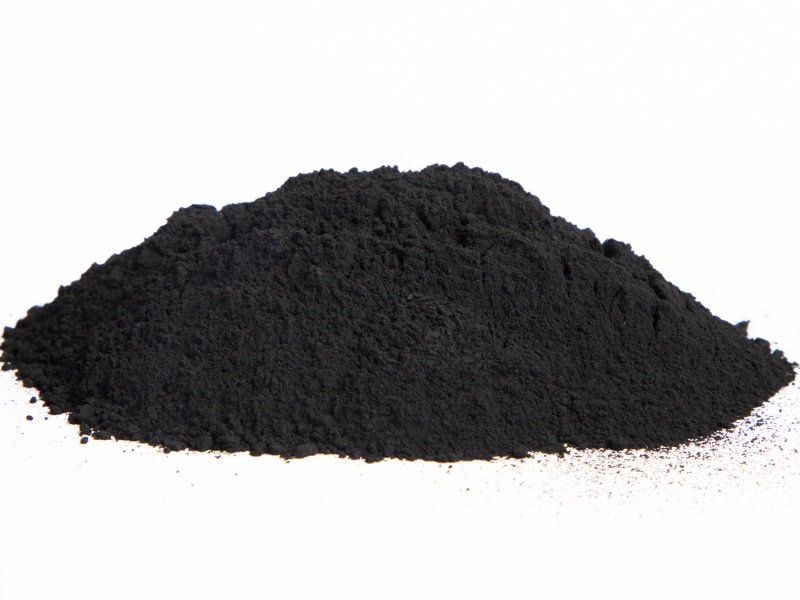
Manganese Dioxide (MnO2) is a typical high-valence manganese oxide with a single manganese valence state of +4. It has diverse crystal polymorphs, including α-MnO2, β-MnO2, γ-MnO2, and δ-MnO2, each with a unique spatial structure. Most MnO2 crystals adopt tunnel or layered structures, composed of Mn-O octahedral units connected by shared edges and corners. Among them, β-MnO2 features a stable rutile-type structure with compact [1×1] tiny tunnels, which results in high structural stability but limited ion transmission space; while γ-MnO2 has disordered layered defects, providing abundant active sites for ion embedding and redox reactions.
Overall, MnO2 has a porous and defective structural feature, with a large specific surface area, strong redox activity, and excellent ion adsorption and migration capabilities. However, its structural rigidity is weak, and it is prone to volume expansion and contraction during continuous charge and discharge cycles.
1.2 Manganese Tetroxide (Mn3O4) Structure Characteristics
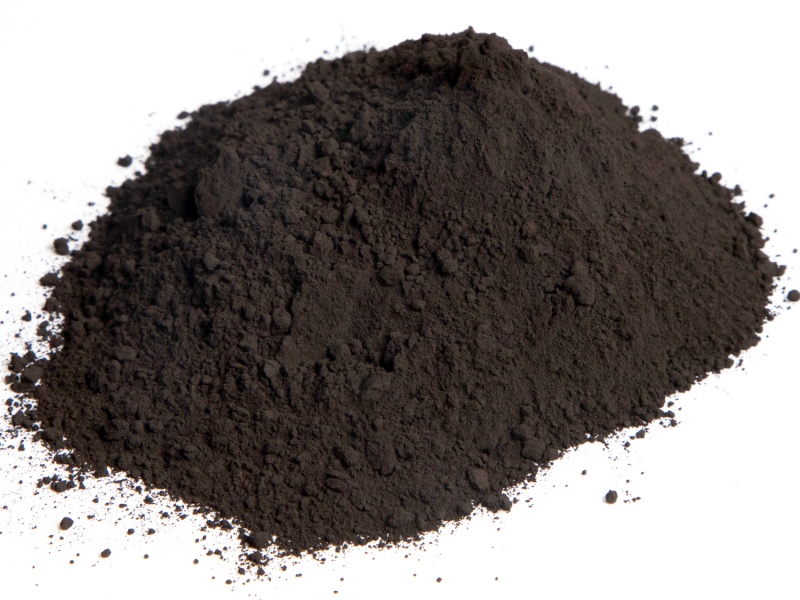
Manganese Tetroxide (Mn3O4) is a mixed-valence manganese oxide containing both +2 and +3 valence manganese ions, with a molecular structure conforming to the spinel hausmannite phase. At room temperature, Mn3O4 presents a tetragonally deformed spinel structure, where Mn²⁺ occupies tetrahedral voids and Mn³⁺ fills octahedral voids, forming a stable three-dimensional network structure. This unique atomic arrangement endows Manganese Tetroxide with higher structural compactness and mechanical stability than MnO2.
Different from the porous tunnel structure of MnO2, the dense spinel structure of Mn3O4 effectively relieves structural damage caused by ion embedding and detachment. Its internal three-dimensional conductive network significantly improves electron transmission efficiency, laying a foundation for its excellent electrical conductivity and cycling stability in electronic devices.
2. Core Performance Differences in Electronic Applications
Structural differences directly differentiate the electrical conductivity, electrochemical stability, cycling performance, and magnetic properties of Manganese Dioxide (MnO2) and Manganese Tetroxide (Mn3O4), making them suitable for different electronic application scenarios.
2.1 Electrical Conductivity
Mn3O4 has outstanding intrinsic electrical conductivity, with an electronic conductivity of approximately 10 S/cm, far higher than that of MnO2 (about 1 S/cm). The mixed-valence synergistic effect of Mn²⁺/Mn³⁺ in Mn3O4 accelerates electron hopping and transmission, enabling it to form an efficient conductive network in electronic components. In contrast, MnO2 is a typical semiconductor material with low electron mobility, relying mainly on ion diffusion to complete electrochemical reactions, resulting in poor high-rate performance.
2.2 Electrochemical Stability & Cycling Life
Manganese Dioxide (MnO2) has ultra-high specific capacitance and initial capacity, making it ideal for high-energy-density energy storage scenarios. However, its unstable tunnel structure is prone to collapse during long-term charge and discharge, leading to rapid capacity attenuation and poor cycling stability. Manganese Tetroxide (Mn3O4), benefited from its stable spinel structure, exhibits minimal volume change in cyclic electrochemical reactions, effectively avoiding structural pulverization. It delivers excellent long-term cycling stability and high-temperature resistance, suitable for high-stability and high-reliability electronic devices.
2.3 Magnetic & Dielectric Properties
Mn3O4 possesses unique soft magnetic properties, which is a core advantage that MnO2 does not have. It is a key raw material for manufacturing manganese-zinc ferrite soft magnetic materials, widely used in electromagnetic induction and anti-interference electronic components. MnO2 has no obvious magnetic properties, focusing more on electrochemical redox functions rather than magnetic applications in the electronics field.
3. Typical Electronic Application Scenarios
3.1 Main Applications of MnO2 (Manganese Dioxide)
Relying on its high specific surface area, strong redox activity, and excellent ion storage capacity, MnO2 is mainly applied in energy storage electronic devices. It is a classic cathode material for zinc-ion batteries, alkaline manganese batteries, and supercapacitors, and is also widely used in the electrode modification of miniature electronic energy storage modules. Its high energy density can effectively meet the power supply needs of small consumer electronic devices such as wearable devices and Bluetooth modules.
3.2 Main Applications of Mn3O4 (Manganese Tetroxide)
Mn3O4 focuses on high-stability electronic components and new energy battery precursor fields. As a core raw material for soft magnetic ferrites, it is used to produce inductors, transformers, and electromagnetic shielding components for precision electronic equipment. In new energy electronics, it serves as a key precursor for lithium manganate and manganese iron phosphate lithium cathode materials, applied in 3C digital products, new energy vehicle power batteries, and industrial energy storage systems. Its high conductivity and structural stability also make it an excellent conductive additive for electronic electrode materials.
4. FAQ
Q1: What are the core differences between Manganese Dioxide (MnO2) and Manganese Tetroxide (Mn3O4) for electronic industry selection?
A: MnO2 is suitable for scenarios requiring high energy density and low cost, such as ordinary supercapacitors and small disposable/secondary batteries; Mn3O4 is preferred for scenarios requiring high conductivity, long cycle life, and magnetic properties, such as precision magnetic electronic components and high-stability new energy batteries. Users can select materials according to device performance requirements, and Anhui Fitech Material provides professional material selection guidance based on application fields.
Q2: Does Anhui Fitech Material supply Manganese Dioxide and Manganese Tetroxide products?
A: Yes. Anhui Fitech Material is a professional manufacturer of manganese series products, specializing in the production and supply of various specifications of Manganese Dioxide (MnO2) and Manganese Tetroxide (Mn3O4). Our product covers multiple purity grades and complete specifications, fully adapting to consumer electronics, new energy energy storage, precision magnetic components, industrial manufacturing and other different application fields.
Q3: What customized services can Anhui Fitech Material provide for manganese oxide products?
A: We support full-dimensional customized services: adjustable particle size and specific gravity according to customer process requirements; strict production control ensures products with high quality and low impurity, meeting electronic grade and industrial grade high-standard requirements. In addition, we can provide free product samples, support third-party authoritative inspection of all products, and customize packaging solutions according to customer storage and transportation needs.
Q4: What is the delivery cycle of Anhui Fitech Material’s manganese series products?
A: We have sufficient raw material reserves and standardized production lines. The conventional delivery cycle of Manganese Dioxide and Manganese Tetroxide products is 15~20 days, realizing fast and efficient delivery to ensure customers’ smooth production progress.
Q5: What are the quality advantages of Fitech’s MnO2 and Mn3O4?
A: Adopting advanced oxidation synthesis and purification processes, our products feature ultra-low impurity content, stable physical and chemical indicators, uniform particle dispersion, and excellent batch consistency. Whether it is electronic grade high-purity products or industrial grade conventional products, they can meet the strict performance requirements of downstream electronic manufacturing and new energy industries.

 English






 Network Supported