In modern steelmaking, deoxidation is a core process that determines the purity, mechanical properties, and finished quality of steel products. Selecting a high-efficiency and low-cost deoxidizer is crucial for steel mills to control production costs and improve product competitiveness.
Ferro Silicon (FeSi) and Silicomanganese (FeSiMn) are the two most widely used deoxidation alloys in the steel industry. Both have unique deoxidation mechanisms, performance characteristics, and application scenarios.
Many steel mill procurement and technical teams often struggle with the choice between Ferro Silicon and Silicomanganese: which one delivers better comprehensive cost performance for conventional steelmaking, special steel smelting, and casting production? This article will conduct an in-depth comparison from the aspects of deoxidation performance, element recovery rate, actual production cost, and applicable scenarios, helping enterprises make optimal material selection decisions.
1. Basic Overview of Ferro Silicon (FeSi) and Silicomanganese (FeSiMn)
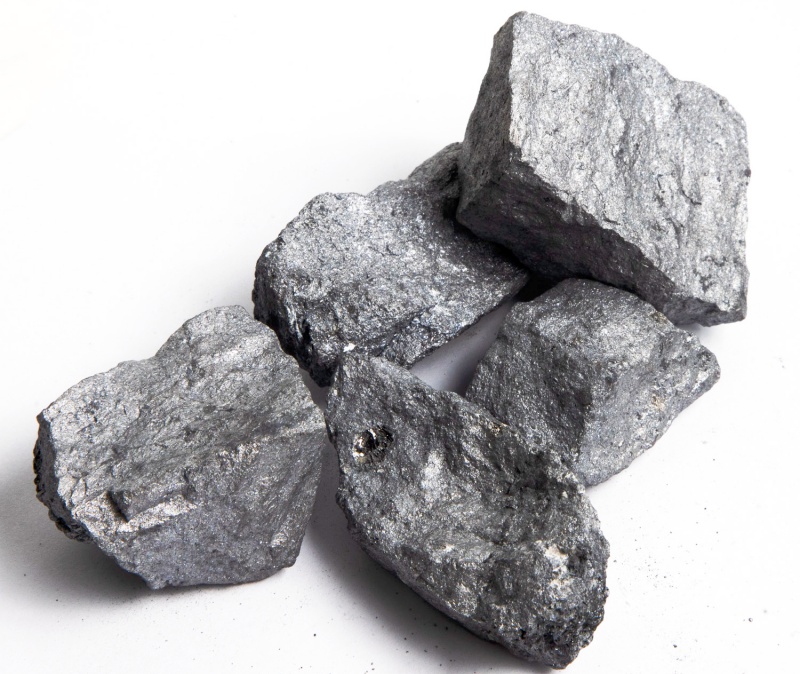
1.1 Ferro Silicon (FeSi)
Ferro Silicon (FeSi) is an iron alloy composed of iron and silicon, with mainstream models including FeSi72 and FeSi75 that dominate the steelmaking market. It is a high-efficiency strong deoxidizer with strong affinity between silicon elements and oxygen in molten steel. In the steelmaking process, FeSi can quickly react with oxygen to generate stable silicon dioxide inclusions, which float up and separate from molten steel, effectively reducing the oxygen content of molten steel and improving steel compactness.
In addition to deoxidation, Ferro Silicon can also refine steel grain structure, improve the toughness and ductility of steel products, and is widely used in deoxidation and alloying adjustment of carbon steel, stainless steel, alloy steel and other steel types. It is also a key additive in the casting industry, which can improve the fluidity of molten iron and reduce casting defects.
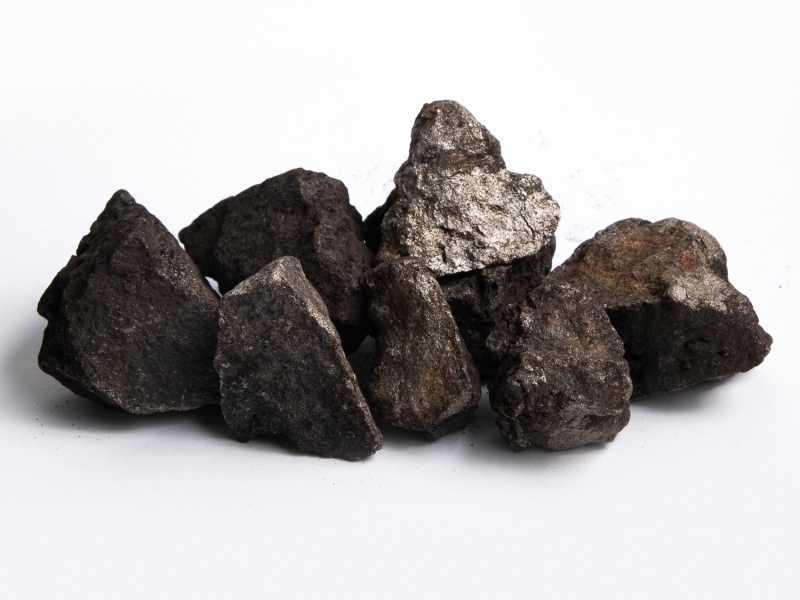
1.2 Silicomanganese (FeSiMn)
Silicomanganese (FeSiMn) is a composite iron alloy containing silicon, manganese and iron elements, with common specifications such as FeMn60Si14 and FeMn65Si17. Different from single-function Ferro Silicon (FeSi), Silicomanganese (FeSiMn) has dual functions of deoxidation and alloying. Manganese elements can cooperate with silicon elements to complete deep deoxidation of molten steel, while simultaneously supplementing manganese elements required for steel performance, realizing one-step completion of deoxidation and component adjustment.
FeSiMn features mild deoxidation reaction, stable element recovery rate, and low slag generation. It can effectively reduce the burning loss of beneficial elements in molten steel, optimize the steelmaking rhythm, and is very suitable for continuous casting production lines and large-scale steel mill batch smelting.
2. Core Performance Comparison: Deoxidation Efficiency & Practical Effect
2.1 Deoxidation Capacity
Ferro Silicon (FeSi) has stronger single deoxidation capacity. The silicon element has extremely high oxygen affinity, which can quickly remove free oxygen in molten steel in a short time, and is suitable for deep deoxidation and rapid deoxidation processes in the later stage of steelmaking. For high-purity steel and high-grade alloy steel with strict oxygen content requirements, FeSi can achieve more thorough deoxidation effect.
Silicomanganese (FeSiMn) adopts composite deoxidation of silicon and manganese, with slightly lower single deoxidation efficiency than FeSi, but the deoxidation reaction is more stable. The composite oxide generated by the reaction is easier to float and remove, which can reduce residual inclusions in molten steel and improve the surface quality of steel products. It avoids the problem of local excessive deoxidation caused by the rapid reaction of single ferro silicon.
2.2 Element Recovery Rate & Steelmaking Stability
In actual production, the recovery rate of silicon elements of Ferro Silicon is affected by furnace temperature and feeding timing, with a fluctuation range of 85%-92%. It is mostly used for targeted fine deoxidation and component adjustment.
Silicomanganese (FeSiMn) has stable overall element recovery rate (88%-95%). The dual-element synergistic effect makes the molten steel composition more uniform after deoxidation, reduces the frequency of secondary component adjustment, stabilizes the continuous casting process, and significantly reduces the rate of steel breakout and defective products in mass production.
3. Cost-Performance Analysis for Steel Mills
3.1 Unit Raw Material Cost
From the perspective of market unit price, the mainstream price of standard Ferro Silicon FeSi75 is slightly higher than that of conventional Silicomanganese FeSiMn. However, FeSi has higher pure silicon content and stronger single deoxidation capacity, with less consumption per ton of steel.
FeSiMn has a lower unit price and can complete deoxidation and manganese alloying at one time. For ordinary carbon steel and low-alloy steel that need to supplement manganese components, using Silicomanganese can save the separate procurement cost of manganese alloy, with prominent comprehensive cost advantages.
3.2 Comprehensive Production Cost
For high-end steel production (stainless steel, tool steel, high-strength alloy steel) with strict purity requirements: Ferro Silicon (FeSi) is more cost-effective. Its thorough deoxidation performance improves steel purity, reduces defective product losses, and avoids quality risks caused by residual impurities, bringing higher long-term value.
For ordinary construction steel, carbon steel and general casting production: Silicomanganese (FeSiMn) is the better choice. It simplifies the feeding process, shortens the smelting cycle, reduces auxiliary material consumption and labor costs, and the comprehensive steelmaking cost per ton of steel is lower.
4. Applicable Scenarios of FeSi and FeSiMn
-
Ferro Silicon (FeSi): Suitable for high-purity steel, special alloy steel, precision casting products, and production processes requiring deep deoxidation and strict grain refinement. It is the preferred deoxidizer for high-end steel and casting enterprises.
-
Silicomanganese (FeSiMn): Suitable for mass production of ordinary carbon steel, structural steel, wire rod and strip steel, as well as conventional casting processes. It is the mainstream economical deoxidizer for large and medium-sized ordinary steel mills.
5. Reliable Supplier Recommendation: Anhui Fitech Material
To ensure stable deoxidation effect and controllable comprehensive cost, choosing a high-quality and reliable iron alloy supplier is as important as material selection. Anhui Fitech Material is a professional and reputable manufacturer of Ferro Silicon and Silicomanganese in China, focusing on the R&D, production and sales of FeSi and FeSiMn alloys for steelmaking and casting industries.
The company’s Ferro Silicon and Silicomanganese products strictly follow national standard production, with a standard particle size of 10~50mm that perfectly matches the feeding equipment and smelting process of most steel mills and casting factories. Adhering to high-quality production standards, the products feature ultra-low impurity content, stable chemical composition, and high element recovery rate, which can effectively stabilize steelmaking quality and reduce enterprise comprehensive consumption.
In terms of service and delivery, Anhui Fitech Material has sufficient factory inventory and mature supply chain system, realizing fast delivery within 15~20 days to avoid production shutdown losses caused by material shortage. Meanwhile, the company supports free sample provision for customers to test and verify, and fully accepts third-party authoritative inspection of product indicators, with guaranteed product quality and transparent indicators.
6. FAQ
Q1: What are the core differences between Ferro Silicon (FeSi) and Silicomanganese (FeSiMn) in steelmaking?
Ferro Silicon (FeSi) is a single silicon-based deoxidizer with strong deep deoxidation and grain refinement ability, suitable for high-end high-purity steel production. Silicomanganese (FeSiMn) is a silicon-manganese composite alloy with dual functions of deoxidation and manganese alloying, stable reaction and low comprehensive cost, more suitable for mass production of ordinary steel. Both are essential deoxidizers for steelmaking and casting industries.
Q2: What is the standard particle size of Anhui Fitech Material’s FeSi and FeSiMn products?
All Ferro Silicon and Silicomanganese products produced by Anhui Fitech Material adopt national standard 10~50mm particle size, which is compatible with most steelmaking and casting production equipment, ensuring uniform feeding and stable deoxidation reaction, avoiding material waste and uneven smelting effect caused by inconsistent particle size.
Q3: What are the quality advantages of Anhui Fitech Material’s iron alloy products?
Our FeSi and FeSiMn products have low impurity content, stable chemical indicators and high element recovery rate. Strict quality control is implemented in the production process to effectively improve molten steel purity, stabilize steel product performance, and reduce the rate of defective products and comprehensive production costs for steel mills.
Q4: What is the delivery cycle of Anhui Fitech Material?
We have sufficient factory spot inventory and standardized production scheduling. The conventional delivery cycle is 15~20 days, which can efficiently meet the continuous production demand of steel mills and casting enterprises, greatly shortening the customer’s material preparation cycle.
Q5: Can I get samples and conduct third-party inspection?
Anhui Fitech Material supports free product sample provision for customers to conduct factory testing and trial smelting. At the same time, we fully support third-party authoritative inspection of product chemical composition, particle size and impurity indicators, with open and transparent product quality and reliable quality assurance.
Q6: What industries are Fitech’s Ferro Silicon and Silicomanganese suitable for?
Our high-quality FeSi and FeSiMn products are widely applicable to steelmaking industry (carbon steel, alloy steel, stainless steel smelting, deoxidation and component adjustment) and casting industry (cast iron, cast steel production, improving molten metal fluidity and product compactness).

 English





 Network Supported