 English


Search
What Are You Looking For?


We are a high-tech Manufacturer and ISO9001:2015 certified company who is known as ''One Stop Advanced Materials Provider'' in China, concentrated on providing high-purity metals and high-quality chemical raw materials for high-tech enterprises and research institutes. We have cooperated with a number of domestic research institutes to jointly develop new products and to improve product processing system.


Introduction
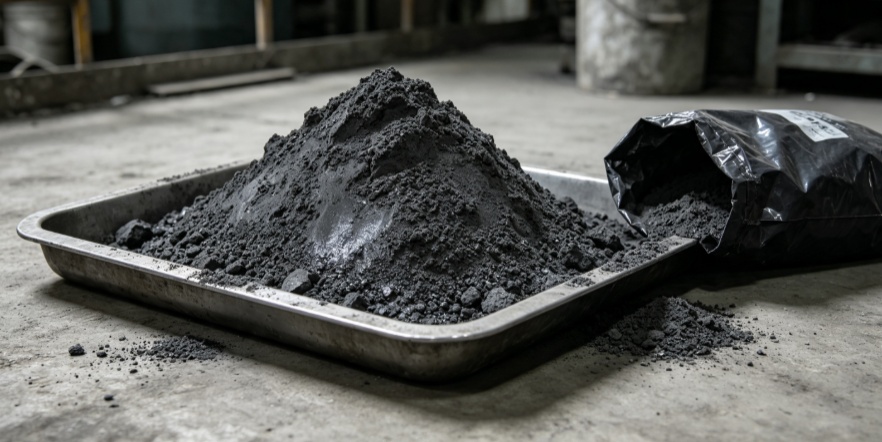
Surface protection is a core approach to extend the service life of molds, cutting tools and mechanical moving components. Traditional chromium coatings deliver basic wear resistance, yet they often fail when facing combined conditions of friction, humidity and chemical corrosion. Chromium nitride powder has become a favoured raw material for advanced surface engineering. After deposition via PVD, CVD or thermal spraying processes, it forms dense chromium nitride coating layers, breaking through many limitations of conventional metallic chromium and single alloy coatings. Properly tuned nitrogen content can balance hardness, toughness and corrosion resistance, adapting to diverse harsh working conditions. This guide focuses on the performance strengths of chromium nitride coatings and typical industrial application scenarios.
1. Core Superiorities Over Traditional Coating Materials
Pure chromium coating possesses high hardness but suffers from poor corrosion resistance and high internal stress, prone to cracking under alternating loads. Common alloy coatings usually sacrifice hardness for anti-corrosion capability.Chromium nitride coating addresses these pain points simultaneously:
Adjusting nitrogen content within the powder can shift the ratio of Cr and CrN phases, catering to low-corrosion wear-resistant scenarios or heavy anti-corrosion working environments respectively. Particle size distribution also directly affects powder fluidity and deposition efficiency during spraying.
2. Typical Industrial Application Scenarios
Key Technical Considerations in Production
Impurity elements including carbon, oxygen, silicon and iron must be strictly limited. Excess impurities will introduce tiny pores and brittle phases inside the coating, resulting in peeling and shortened service life. Meanwhile, matched particle grading is essential; improper particle size will cause unstable powder feeding and low coating forming rate.
FAQ
Q1: What determines the difference between various chromium nitride coatings?
A: The nitrogen content of the raw powder is the key factor. Higher nitrogen ratio generates more CrN phase for superior corrosion resistance, while moderate nitrogen content achieves a balance between toughness and hardness.
Q2: Which coating processes are compatible with chromium nitride powder?
A: It supports plasma spraying, HVOF thermal spraying and PVD physical vapor deposition. Particle size should be selected according to your specific equipment parameters.
Conclusion
Against increasingly demanding industrial working conditions, chromium nitride provides a balanced solution for wear and corrosion protection that traditional single chromium coatings cannot match. Controllable nitrogen content and low impurity indicators are critical prerequisites for stable coating performance.
We supply chromium nitride powder with adjustable nitrogen range, standard particle size covering 60–325 mesh and strict impurity control. With stable chemical composition and available customized grading, it can support continuous and stable production for surface engineering manufacturers.
Innovation industrial base, Huguang Road, Shushan District, Hefei, Anhui, China.
Copyright @ 2026 Anhui Fitech Material Co.,Ltd All Rights Reserved. Network Supported
leave a message
Scan to Wechat :

Scan to WhatsApp :